We would love to have a chat about how we can help your business, give us a call today on 0800 028 3557.
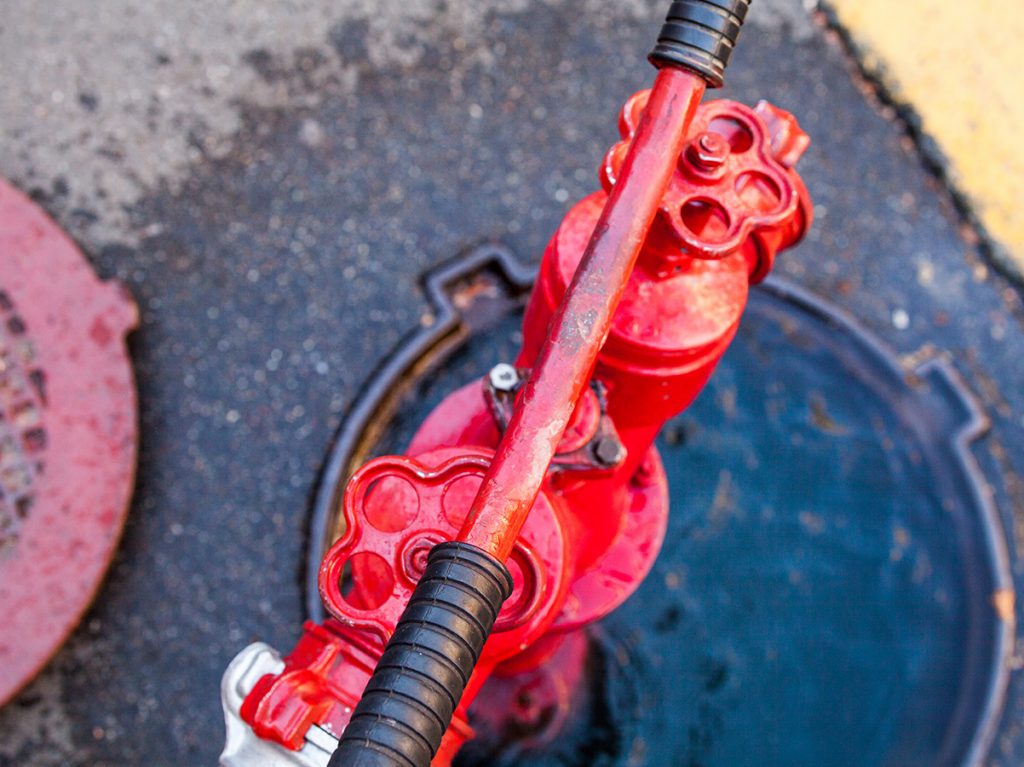

We can provide all required fire hydrant testing and maintenance to provide peace of mind that your business is operating safely. We provide pressure and flow testing for fire hydrants in accordance with BS9990, to ensure that they will work effectively in an emergency.
Through thorough fire hydrant testing, our experienced pipeline team can quickly identify faulty hydrants and other pipe accessories, then repair or replace them depending on the severity of the issue.


Fire hydrant testing typically includes checking the condition and accessibility of the hydrant, operating the valve and inspecting for leaks or damage. Flow and pressure testing can then be carried out to confirm that the hydrant and water supply can provide the required performance. Any problems with the hydrant, valves or associated pipework can then be identified for further investigation, repair or replacement.
A fire hydrant flow test measures how much water can be delivered through the hydrant when it is operating. The test helps assess whether the hydrant and its supporting water supply can provide sufficient flow for firefighting. It can also highlight problems such as restrictions, damaged components or issues elsewhere within the water network.
Pressure and flow testing helps confirm that a fire hydrant can deliver an adequate water supply when it is needed. A hydrant may appear to be in good condition while still having insufficient pressure or flow because of problems with valves, pipework or the wider water network. Testing can identify these issues before they affect the hydrant’s performance during an emergency.
Fire hydrants should be inspected and tested regularly to make sure they remain accessible, operational and capable of providing an adequate water supply in an emergency. The exact testing frequency can depend on the type of hydrant, site requirements and the relevant fire safety arrangements. Private hydrants should be included within a planned inspection and maintenance programme, with additional testing carried out if faults, damage or changes to the water network are identified.
If testing identifies a problem, the cause should be investigated and the hydrant or associated pipework repaired as necessary. Issues can include faulty or seized valves, leaks, damaged components, restrictions or inadequate flow and pressure. Depending on the severity of the fault, the hydrant may require servicing, repair or replacement before it can be considered fully operational.
Private fire hydrants are generally the responsibility of the owner or occupier of the site on which they are installed. Unlike hydrants on the public water network, private hydrants are not normally maintained by the local water company or fire and rescue service. Businesses with private hydrants should therefore ensure that appropriate inspection, testing and maintenance arrangements are in place.
Complete the enquiry form below and we’ll get back to you soon.